Conditions · 9 min
What does restless leg syndrome feel like?
September 5, 2026
Restless leg syndrome feels like a deep, hard-to-describe urge to move your legs, usually paired with a crawling, tugging, fizzing or electric sensation inside the muscle rather than on the skin. It builds when you are still — sitting in the evening or lying in bed — and eases within seconds of walking or stretching, then returns once you settle again. Because the urge peaks at night, most people notice it first as difficulty falling asleep rather than as a leg problem.
TL;DR
Quick answer: restless legs is an urge to move the legs with an uncomfortable inner sensation that worsens at rest, worsens at night, and improves with movement. If it happens most nights or wrecks your sleep, it is treatable and worth a proper evaluation.
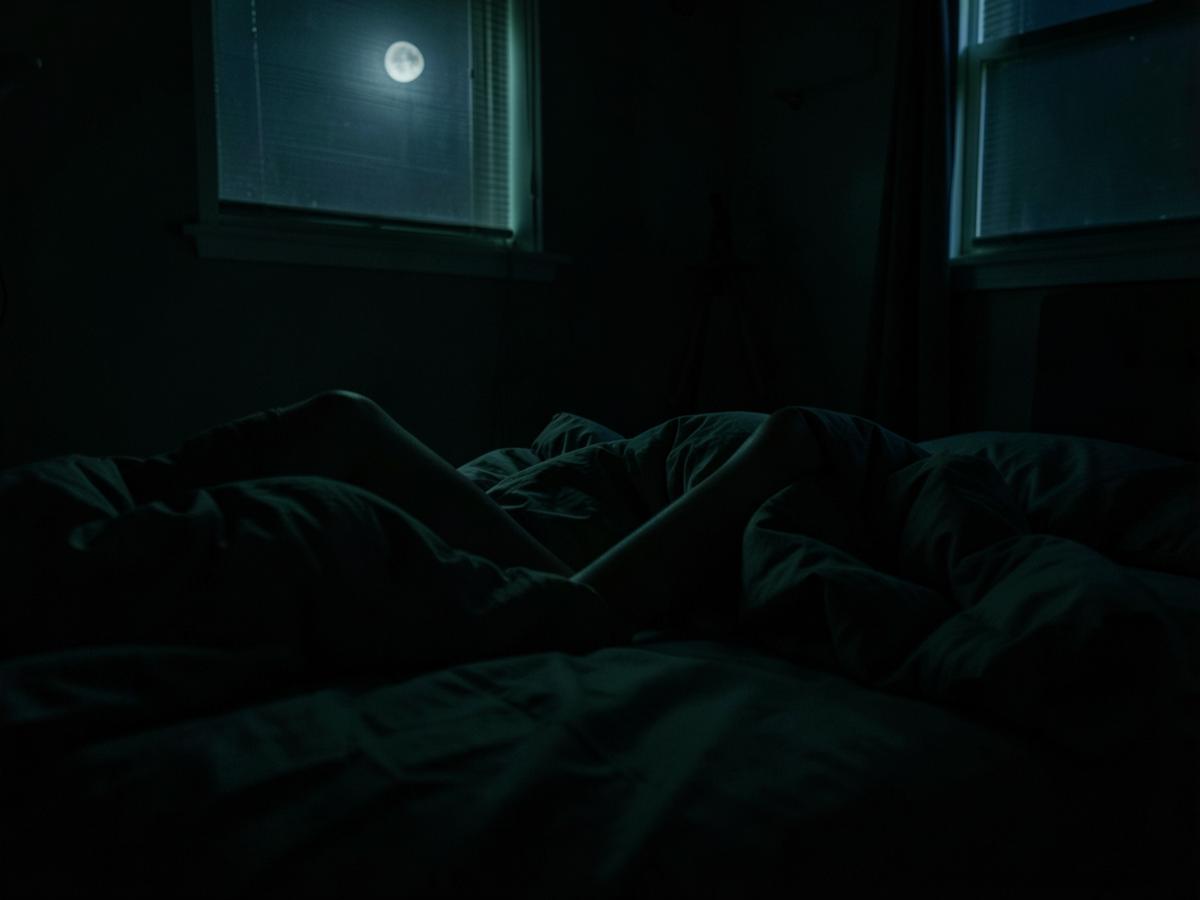
What does restless leg syndrome feel like in the legs?
Most people describe a sensation inside the calf or thigh rather than on the surface of the skin — crawling, pulling, throbbing, fizzing, or like a mild electric current. It is usually uncomfortable rather than sharply painful, and the dominant feature is the urge to move, not the sensation itself.
- —Creeping or crawling deep in the calf, as if something is moving under the muscle
- —A pulling or tugging feeling that makes stillness feel intolerable
- —Fizzing, tingling, or a faint electric buzz
- —An itch that stretching relieves but scratching does not
- —Both legs more often than one, though it can alternate sides
The tell-tale pattern is relief with movement. Walking, stretching, rubbing the legs, or shifting position quiets the sensation almost immediately, and it returns when you stop.
What causes restless leg syndrome at night?
The night-time pattern comes from your body clock: restless legs symptoms follow a circadian pattern and peak in the evening and early night, a feature built into the condition's diagnostic criteria (review in Sleep Science, 2024).
Sleep medicine research links restless legs to low iron availability in the brain and to the dopamine signalling that iron supports, which is why symptoms often appear or worsen when body iron stores are low (Connor and colleagues, Sleep Medicine, 2017).
Common triggers and contributors
- —Low iron stores, including from heavy periods, pregnancy, or blood donation
- —Pregnancy, particularly the third trimester
- —Kidney disease and some chronic conditions
- —Certain medications, including some antidepressants, antihistamines, and anti-nausea drugs
- —Alcohol, nicotine, and late caffeine
- —Long periods of sitting still, such as evening travel
Restless legs also runs in families, so a parent or sibling with the same night-time leg symptoms makes the diagnosis more likely.
How do I know if it is restless leg syndrome or something else?
Restless legs is diagnosed from your description, not a scan, and it hinges on four features: an urge to move with uncomfortable sensations, worsening at rest, relief with movement, and symptoms worse in the evening or night. If any of those four is missing, another cause is more likely.
- —Leg cramps: sudden, painful, visibly knotted muscle — movement does not calm it
- —Nerve pain or neuropathy: burning or numbness that is constant, not relieved by walking
- —Poor circulation: aching brought on by walking rather than relieved by it
- —Periodic limb movements: repetitive kicks during sleep that a bed partner notices while you do not
What helps with restless leg syndrome tonight?
For a bad evening, movement and temperature are the fastest levers: walk for a few minutes, stretch the calves, then use a warm bath or a cool compress — whichever settles your legs. These measures relieve symptoms in the moment but do not treat the underlying cause.
- —Walk, do calf stretches, or pedal a few minutes before bed
- —Warm bath or shower, or a cool compress on the calves
- —Self-massage or a foam roller on the calves and thighs
- —Stop alcohol and nicotine in the evening, and caffeine by early afternoon
- —Get up and move rather than lying still fighting the urge
How do you prevent restless leg syndrome longer term?
Long-term relief usually comes from finding and addressing a driver rather than relying only on bedtime routines. A qualified healthcare professional may consider iron status, medications that can aggravate symptoms, sleep schedule, and other sleep concerns.
The International Restless Legs Syndrome Study Group's iron treatment guidelines recommend measuring iron status — typically ferritin and transferrin saturation — and treating with iron when stores are low, using oral iron first and intravenous iron in selected cases (Allen et al., Sleep Medicine, 2018).
Do not start iron supplements on your own — too much iron is harmful, and dosing should follow blood tests. Similarly, prescription treatments for restless legs need clinician oversight, since some can worsen symptoms over time if used incorrectly.
When should you see a doctor about restless legs?
Talk with a qualified healthcare professional if symptoms occur most nights, cost you sleep, affect your mood or daytime function, or appear during pregnancy or alongside kidney disease. They can evaluate possible causes, review medications, and discuss appropriate next steps.
Treatment choices should follow current specialty guidance: the American Academy of Sleep Medicine's 2025 clinical practice guideline for restless legs syndrome sets out which medications are recommended and which, including long-term dopamine-agonist use, are now advised against.
Frequently asked questions
What does restless leg syndrome feel like?
It feels like an urge to move your legs together with a crawling, pulling, fizzing or electric sensation deep in the muscle. It builds when you are still, is worst in the evening and night, and eases within seconds of walking or stretching.
Why is restless leg syndrome worse at night?
Symptoms follow a daily body-clock rhythm and peak in the evening and early night, which is when you are also most likely to be sitting or lying still. Both factors together make night-time the worst part of the day for restless legs.
How can I stop restless legs immediately?
Movement is the fastest relief: get up and walk, stretch your calves, or massage your legs. A warm bath or a cool compress can help too, though these ease symptoms rather than treat the cause.
Is restless leg syndrome serious?
It is not dangerous in itself, but it can seriously disrupt sleep and daytime function, and it can signal low iron stores or another underlying condition. Persistent symptoms deserve an evaluation.
Does restless leg syndrome go away?
It often improves substantially once a driver is addressed, such as low iron or a medication that aggravates it. Cases without a reversible cause are usually managed long term rather than cured.
Sources
- Winkelman JW et al. Treatment of restless legs syndrome and periodic limb movement disorder: an American Academy of Sleep Medicine clinical practice guideline. J Clin Sleep Med, 2025.
- Allen RP et al. Evidence-based and consensus clinical practice guidelines for the iron treatment of restless legs syndrome/Willis-Ekbom disease in adults and children: an IRLSSG task force report. Sleep Medicine, 2018.
- Connor JR, Patton SM, Oexle K, Allen RP. Iron and restless legs syndrome: treatment, genetics and pathophysiology. Sleep Medicine, 2017.
- Circadian pattern in restless legs syndrome: implications for treatment posology. Sleep Science, 2024.
This article is for general education and is not a substitute for individual medical advice.