Guided · 7 min
30–40 Minutes of Deep Sleep? Here's Why
September 9, 2026
If your tracker consistently shows 30–40 minutes of deep sleep, that is below the typical range — most healthy adults get roughly 15–25% of their night in deep sleep, which works out to about 60–120 minutes for a seven-to-eight-hour night. But before assuming something is wrong, rule out the most common false alarm: consumer wearables are good at estimating total sleep time but much less reliable at separating deep sleep from light sleep, and they can underreport it compared with a lab-grade EEG. If you also feel consistently foggy, sore, or wiped out despite enough hours, that combination is more meaningful than the number alone — and the usual drivers are stress, evening alcohol or caffeine, a warm bedroom, an irregular schedule, or in some cases undiagnosed sleep apnea.
TL;DR
Quick answer: 30–40 minutes of deep sleep is below the typical 15–25% of the night most adults get, but trackers often underreport deep sleep, so how you feel matters as much as the number. If fatigue is real, the highest-value fixes are a consistent sleep/wake time, earlier workouts, earlier caffeine cutoffs, less evening alcohol, a cooler room, and a real wind-down — with loud snoring or gasping as a sign to get evaluated for sleep apnea.
What is deep sleep, actually?
Deep sleep — also called slow-wave sleep or N3 — is the stage where your body does its heaviest physical repair work. Growth hormone release, tissue repair, immune system maintenance, and glymphatic “brain cleaning” all concentrate here. It is also the sleep stage most responsible for that feeling of being physically restored, as opposed to just “not tired.”
Most of it happens in the first half of the night. Your earliest sleep cycles carry the deepest, longest stretches of slow-wave sleep; later cycles shift toward lighter sleep and REM. That is why anything disrupting your first couple of hours in bed — a late workout, a nightcap, a stressful evening — tends to hit deep sleep disproportionately hard.
How much deep sleep is normal?
For most healthy adults, deep sleep makes up roughly 15–25% of total sleep time. For someone getting seven to eight hours, that works out to somewhere between 60 and 120 minutes a night. So if you are consistently seeing 30–40 minutes, that is genuinely below the typical range — but before assuming something is wrong, it is worth ruling out the most common false alarm first.
Is my sleep tracker even accurate?
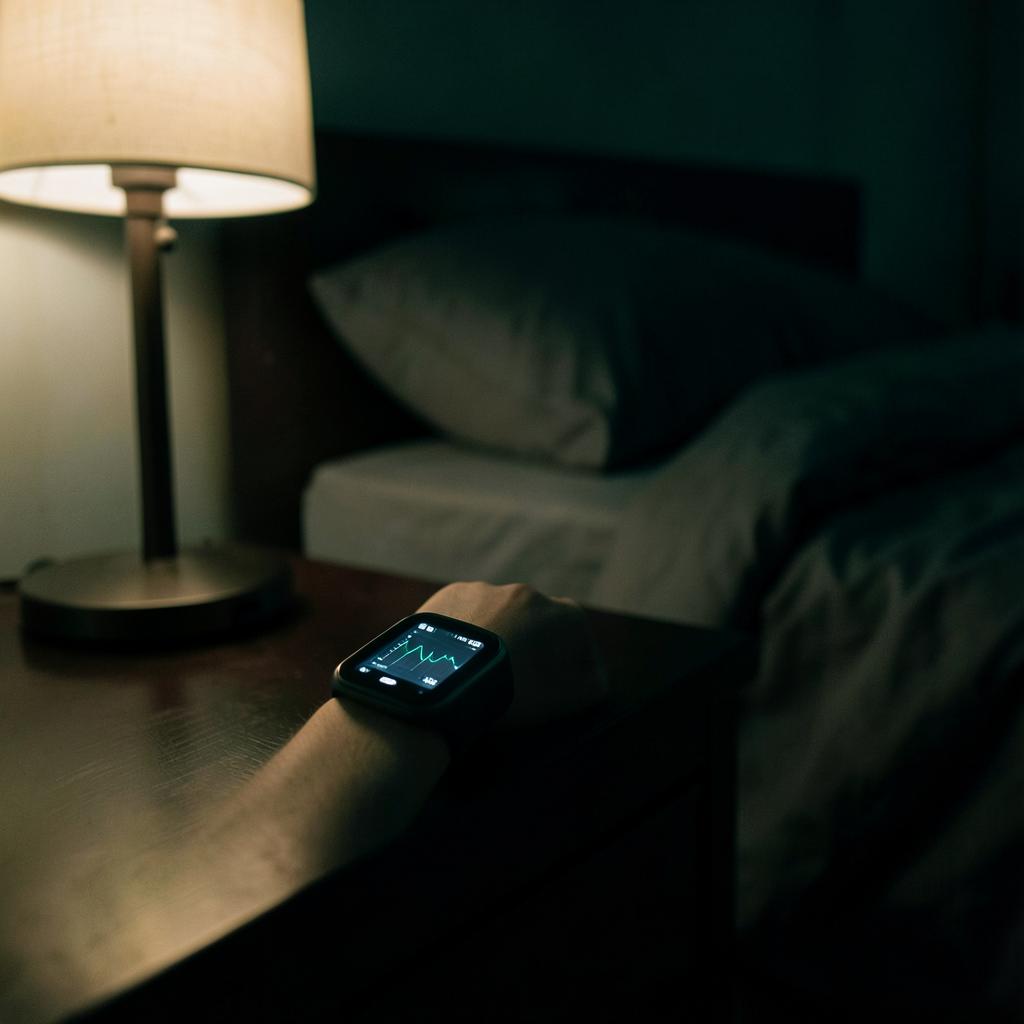
Your tracker might be the problem, not your sleep. Consumer wearables are reasonably good at estimating total sleep time. They are considerably less reliable at telling deep sleep apart from light sleep, because they infer sleep stage from movement and heart rate rather than measuring brain activity directly the way a clinical sleep study (polysomnography) does. It is not unusual for a wearable to significantly underreport deep sleep compared with what a lab-grade EEG would show for the same night.
That does not mean your number is wrong — just that it is worth holding loosely. A useful gut check: if you generally feel physically recovered, are not getting sick often, and do not have other red flags, a low tracker number alone may not mean much. If you feel consistently foggy, sore, or wiped out despite “enough” hours, that combination is more meaningful than the number by itself.
What is actually cutting into my deep sleep?
If the fatigue is real, a handful of factors are the usual suspects — often more than one at once.
- —Stress and evening cortisol — cortisol is supposed to be low at night and rise toward morning; chronic stress keeps it elevated, keeping your brain in a lighter, more alert state right when it should be dropping into slow-wave sleep
- —Alcohol — it might help you fall asleep faster, but it fragments and suppresses deep sleep later in the night
- —Caffeine timing — its half-life is long enough that an early-afternoon coffee can still be affecting your nervous system at bedtime, even if you do not feel “wired”
- —A too-warm bedroom — your core body temperature needs to drop for deep sleep to initiate properly, and a warm room works against that
- —An irregular schedule — deep sleep is driven partly by sleep pressure, and inconsistent bed and wake times disrupt that buildup, showing up as shallower sleep
- —Undiagnosed sleep apnea — repeated breathing interruptions pull you out of deep sleep without you remembering it; loud snoring, gasping, or waking with a dry mouth or headache are signs worth paying attention to
- —Age — deep sleep naturally declines over the decades, though lifestyle factors often accelerate the decline further than biology alone would
What actually helps increase deep sleep?
The good news: most of these are things you can influence directly.
- —Move your workouts earlier — regular aerobic exercise supports deep sleep, but not within a couple of hours of bedtime, when it raises core temperature and cortisol right when you want both dropping
- —Keep a consistent sleep/wake time, weekends included — one of the simplest, highest-leverage changes for deep sleep specifically
- —Cut caffeine earlier than you think you need to — early afternoon is a safer cutoff than “a few hours before bed”
- —Limit alcohol, especially close to bedtime, even if it seems to help you fall asleep faster
- —Cool the room down — most people sleep better in the mid-to-upper 60s°F
- —Build in a real wind-down window before bed so cortisol and arousal actually decline instead of carrying the day's stress straight into sleep
When is low deep sleep worth a closer look?
If you have cleaned up the basics — consistent schedule, earlier exercise, less evening alcohol and caffeine, a cooler room — and you are still waking up unrefreshed, that is a signal the cause might be something the checklist cannot fix on its own, whether that is an underlying sleep disorder or something else affecting your sleep architecture.
That is exactly the kind of pattern worth digging into properly rather than guessing at. Take our free sleep questionnaire to get a personalized read on what is likely driving your numbers and a concrete plan for what to change first.
Frequently asked questions
Is 30 minutes of deep sleep enough?
Thirty to forty minutes is below the typical range for adults — roughly 15–25% of total sleep, or about 60–120 minutes for a seven-to-eight-hour night. But trackers often underreport deep sleep, so how rested you feel matters as much as the number.
Why is my deep sleep so low even though I sleep 8 hours?
Long time in bed does not guarantee deep sleep. Evening stress and cortisol, alcohol, late caffeine, a warm bedroom, an irregular schedule, or undiagnosed sleep apnea can all suppress slow-wave sleep even when total hours look fine.
Are sleep trackers accurate for deep sleep?
They are reasonably good at estimating total sleep time but much less reliable at separating deep sleep from light sleep, because they infer stages from movement and heart rate rather than measuring brain activity. Underreporting deep sleep is common, so treat the number as a rough signal, not a diagnosis.
How can I get more deep sleep naturally?
Keep a consistent sleep and wake time every day, move exercise earlier in the day, cut caffeine by early afternoon, limit evening alcohol, keep your bedroom cool, and build in a real wind-down before bed.
Does deep sleep decrease with age?
Yes. Slow-wave sleep naturally declines over the decades. That decline is normal, but lifestyle factors like stress, alcohol, caffeine timing, and irregular schedules often accelerate it further than biology alone would.
Can sleep apnea cause low deep sleep?
Yes. Apnea repeatedly pulls you out of deep sleep as your body responds to breathing interruptions, often without you remembering it. Loud snoring, gasping, or waking with a dry mouth or headache are signs worth discussing with a qualified healthcare professional.
Sources
- Chinoy ED et al. Performance of seven consumer sleep-tracking devices compared with polysomnography. Sleep, 2021.
- Ebrahim IO et al. Alcohol and sleep I: effects on normal sleep. Alcoholism: Clinical and Experimental Research, 2013.
- Drake C et al. Caffeine effects on sleep taken 0, 3, or 6 hours before going to bed. Journal of Clinical Sleep Medicine, 2013.
This article is for general education and is not a substitute for individual medical advice.